Every Role I've Played — Junior to CTO, What I Actually Did at Each Level
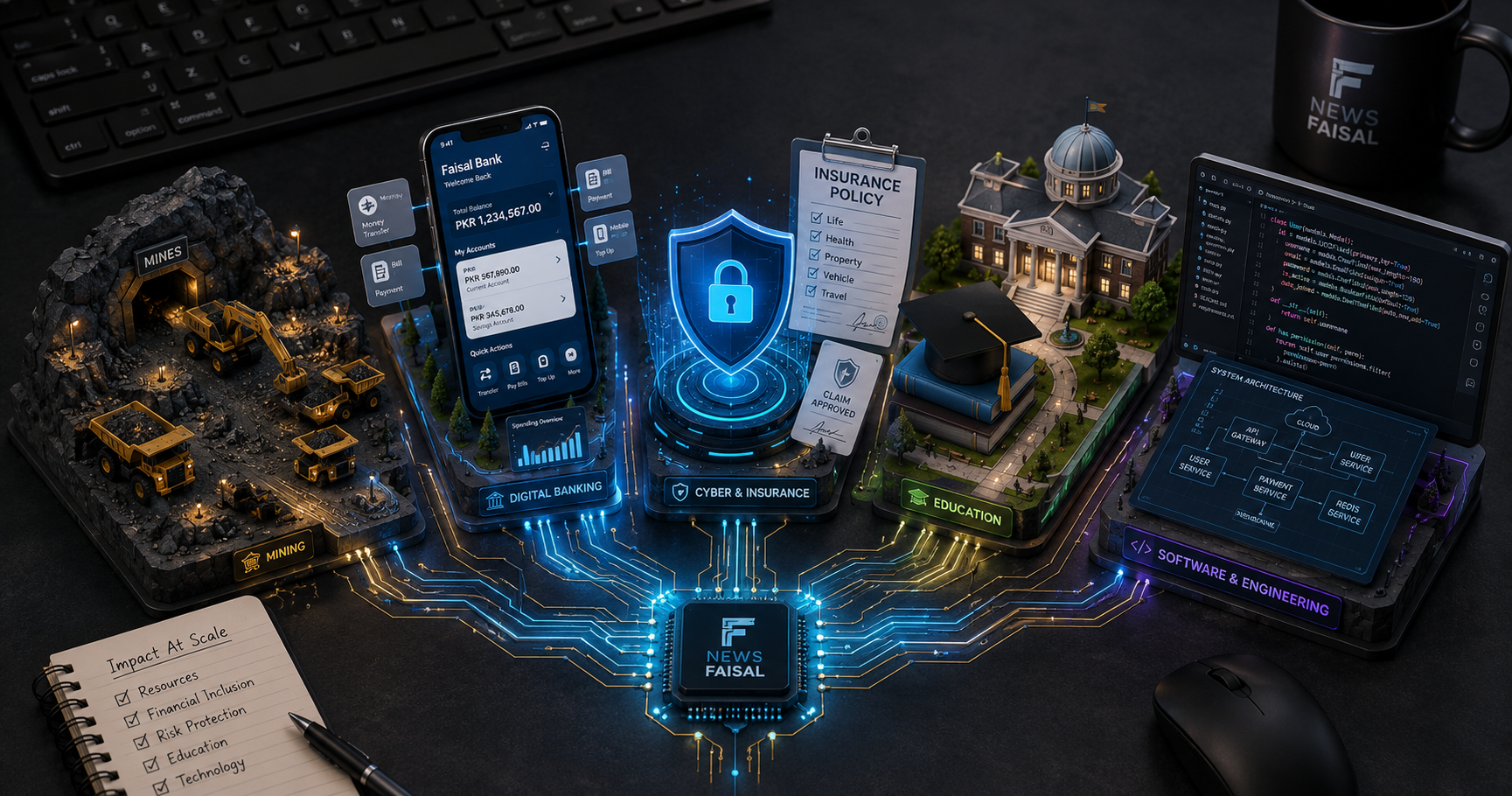
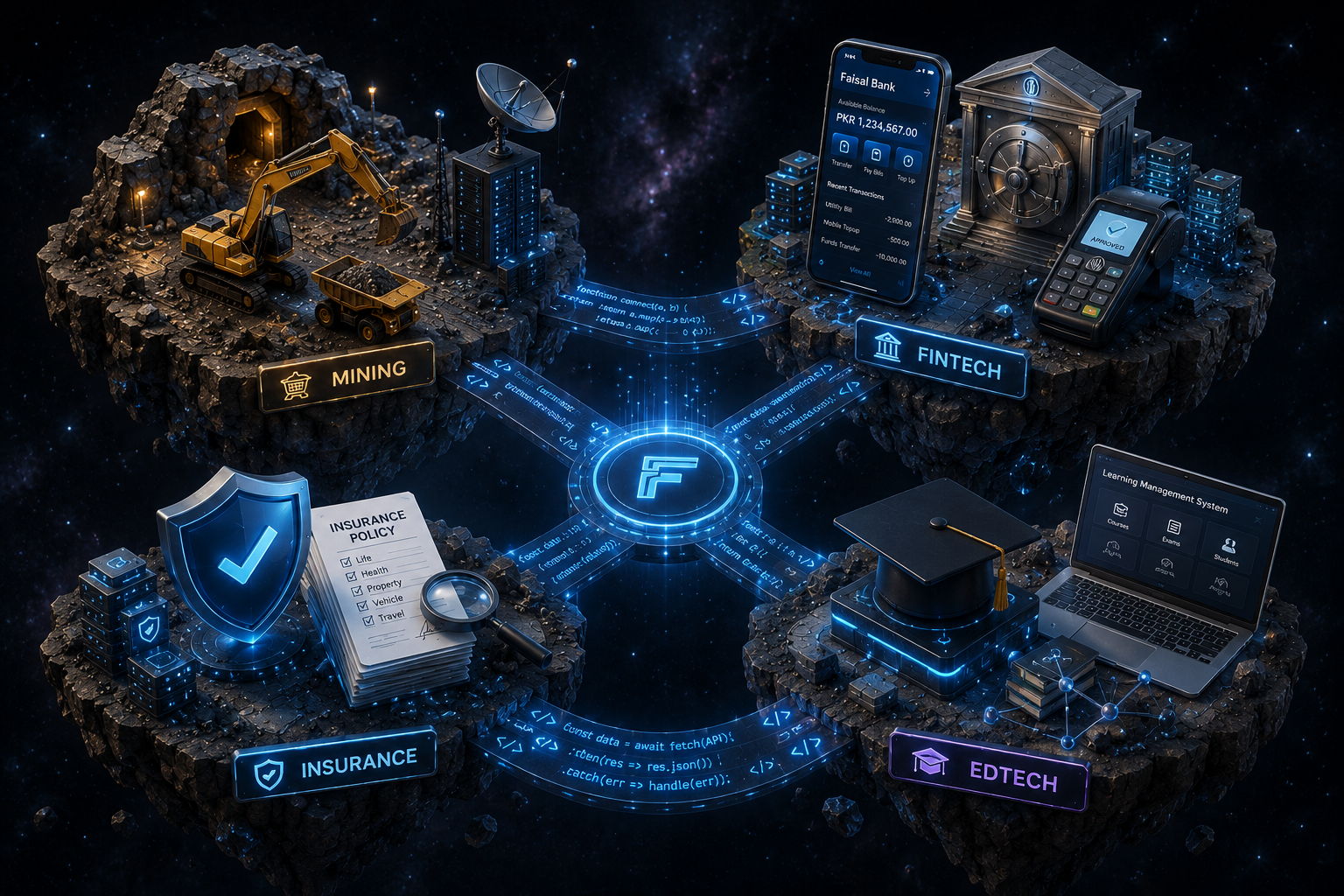
A candid career retrospective tracing my journey through every engineering role: Junior developer grinding through fundamentals, Mid-level shipping production features, Senior designing architectures, Staff building org-wide leverage, and CTO-level strategic decisions. Each section maps to the portfolio strategy framework with real projects, real metrics, and real lessons.
Faisal Affan
Published
Every Role I've Played — Junior to CTO
"You don't become a senior engineer by writing more code. You become one by making decisions that outlive you."
— Me, after breaking production for the 47th time
This isn't theory. This is what I actually did at each career stage — the projects, the mistakes, the wins, and what I'd do differently knowing what I know now.
Stage 1: Junior — The Fundamentals (Year 1-2)
What I Was Selling
Fundamental skills + willingness to learn. I had zero production experience.
My GitHub was tutorial repos. My only asset was I could learn fast and wasn't afraid to break things.
What I Actually Did
Project: University Information System
Built a CRUD app for managing student data at a local campus
Stack: PHP, MySQL, Bootstrap (yes, Bootstrap — it was 2017)
Deployed to shared hosting via FTP (I didn't know what CI/CD was)
Mistake I made: Hardcoded database credentials. Someone found them. Lesson learned permanently.
Project: Small Business Website
Built 5-6 WordPress/WooCommerce sites for local businesses
Learned: DNS, hosting, domain management, basic SEO
Mistake I made: Didn't use version control for the first 3 projects. Lost an entire site when the hosting expired.
What I'd Do Differently
Start using Git from day one
Deploy a personal project to a real URL immediately — the confidence boost is worth the effort
Write README files even for solo projects — your future self will thank you
Execution reliability. I had shipped real features to real users. I had
broken production and fixed it alone at 2 AM. I could take a feature spec and
deliver it end-to-end without hand-holding.
What I Actually Did
SiTepat — Mobile Banking Integration (SEVIMA)
Integrated Flutter mobile app with bank core system via ISO 8583
Built real-time financing dashboard for field agents
Impact: 680K+ Google Play downloads, zero downtime during Eid transaction rush
Lesson: Banking protocols are not "just another API." ISO 8583 has quirks that will destroy your sleep schedule if you don't read the spec cover to cover.
HPU Digital Mining Platform
Built fleet management system for mining trucks across 3 provinces
Implemented fuel anomaly detection that caught theft in month one
Impact: Truck utilization 65% → 79%, Rp 3.2B annual savings
Lesson: IoT is 20% software, 80% dealing with hardware that doesn't behave. GPS trackers lie. Connectivity in remote sites is a privilege, not a guarantee.
Tepati — Field Operations Platform
Built solo in 30 days — Go backend, Flutter mobile, offline-first sync
Eliminated 23% data loss from the previous paper-based system
Impact: 4.1M end-users served
Lesson: Building solo forces you to own everything. There's no "backend team" to blame when the database is slow at 3 AM.
Mid-Level Portfolio Checklist
Item
Did I Do It?
2-3 work case studies
✅ SiTepat, HPU, Tepati
Measurable impact
✅ 680K downloads, 65%→79% utilization, 23% data loss eliminated
Open source contribution
❌ Started too late — should have begun at this stage
Technical articles
⚠️ Wrote internal docs but never published publicly
Architecture depth + technical judgment. I stopped being evaluated on
lines of code. I was evaluated on decisions — what architecture to use, what
trade-offs to accept, and how to guide other developers.
What I Actually Did
Petrosea Minerva — IoT Fleet Telemetry
Designed real-time geofencing engine processing 50K events/second
Architecture: Go → MQTT → Kafka → Time-Series DB → React dashboards
Trade-off decision: Chose MQTT over HTTP for edge-to-cloud because remote mines had intermittent connectivity. HTTP retries were killing our data pipeline.
Designed microservices platform integrating 5+ third-party partners
Trade-off decision: Chose Nuxt.js SSR over React SPA for SEO-critical insurance quoting flows. Australian insurance brokers search for "cyber insurance quote" — we needed Google to see our content.
Impact: Digitized entire cyber insurance lifecycle for Australia's largest insurer
Problem: 100+ mining trucks across remote sites generating GPS/engine data every 2 seconds. Intermittent satellite connectivity. Data must reach HQ dashboard within 5 seconds for real-time alerts.
Decision: Edge gateway with local buffer → MQTT publish (QoS 1) → Kafka stream processing → Time-series DB (TimescaleDB) → WebSocket push to React dashboards.
Trade-offs considered:
HTTP polling (rejected: too much overhead for 50K events/sec)
MQTT chosen for: lightweight, QoS levels, persistent sessions for reconnection
What I'd change now: Add a dead-letter queue for undelivered messages. We lost ~0.5% of telemetry data in the first month before patching.
Offline-First Sync Engine (Tepati)
Problem: Field agents working in areas with zero internet connectivity. They fill forms, capture photos, collect signatures — all must sync when connectivity returns, without data loss or conflicts.
Decision: SQLite local DB → change log table → MQTT push when online → server-side conflict resolution (last-write-wins with timestamp + device ID).
Trade-offs:
CRDT chosen for: eventual consistency with automatic conflict resolution
Rejected operational transform: too complex for our use case, no collaborative editing needed
Senior Portfolio Checklist
Item
Did I Do It?
System architecture diagrams
✅ Documented in case studies
Trade-off decisions with rationale
✅ Golang choice, MQTT vs HTTP, Nuxt vs React
Mentorship impact
⚠️ Informal mentoring only — no structured program
Speaking/writing
✅ Published 20+ technical articles, internal tech talks
Org-wide impact through tooling, standards, and cross-team influence.
At SEVIMA, I didn't just build software — I established patterns that outlasted
my tenure.
What I Actually Did
SEVIMA — Multi-Tenant LMS Architecture Strategy
Designed approach for single codebase serving 100+ university clients
Leverage: Instead of building 100 separate LMS instances, created a white-label framework where each campus gets custom branding + configuration from one deployable artifact
Org-wide impact: Reduced per-client onboarding from 2 weeks to 2 days
Built a form engine supporting 50+ field types with conditional logic
Leverage: Other teams could create complex data collection forms without writing code — drag-and-drop configuration instead of developer tickets
Adoption: Used by 3 product teams across the organization
ISO 8583 Bridge Protocol
Built the core banking integration layer that became the standard for all future bank integrations
Leverage: Subsequent banking partners were integrated in days instead of weeks because the protocol layer was reusable
What I Didn't Do Well at This Level
Didn't write enough internal RFCs or design docs — decisions lived in my head and Slack conversations
Informal mentoring only — should have created structured onboarding and growth programs
Didn't measure or communicate my org-wide impact effectively
Staff-Level Portfolio Checklist
Item
Did I Do It?
Cross-team initiatives
✅ Multi-tenant LMS, form engine, ISO bridge
Standards/tooling adopted org-wide
✅ Form engine used by 3 teams, ISO bridge became standard
Technical strategy docs
❌ Under-documented — major gap in my portfolio
Problem framing at org level
⚠️ Did it instinctively but never formalized
Stage 5: CTO-Level — Business Strategy Through Technology (Current)
What I'm Selling Now
Business outcomes through technical strategy. As a founding/lead engineer
at multiple ventures and now building AI-powered products, my portfolio is
about how technology creates business value — revenue, cost reduction,
competitive moats.
What I'm Actually Doing
AI/LLM Strategy at MiniMax
Evaluating and deploying AI models for production use cases
Strategic decision: Chose MiniMax M2.7 over GPT-4o for cost-performance ratio — 10-20x cheaper with comparable quality on coding benchmarks
Business impact: Reduced AI inference costs by 90%+ while maintaining output quality
Established faisalaffan/foss-contribution as the canonical source of truth for all open-source work
Maintained tools across Dart, Python, TypeScript, and Go ecosystems
Business rationale: Open source is the new resume — every public repo is a portfolio item that works 24/7
This Platform (faisalaffan-news)
Built personal knowledge base spanning 20+ technical articles
Strategic decision: Writing publicly compounds — each article is a backlink, a credibility signal, and a discovery mechanism
SEO-optimized, bilingual (ID+EN), with structured data for AI crawlers
CTO-Level Portfolio Checklist
Item
Did I Do It?
Strategic decisions (build vs buy)
✅ AI model selection, stack choice, FOSS strategy
Business impact metrics
✅ 90% cost reduction, 3x developer output
Org design & hiring philosophy
⚠️ In progress — building team structures now
Budget & vendor management
⚠️ AI API cost optimization done — traditional infra budget pending
Risk management
⚠️ Architecture patterns documented, formal DR plans incomplete
Career Retrospective: What I'd Tell My Younger Self
1
Start Writing Publicly on Day One. Every bug you fix, every architecture
decision you make — write it down. Your 2026 self is mining your 2020 notes
for content. Your future career literally depends on the documentation you
write today.
2
Open Source from the Beginning. Your first PR to a real project is worth
10 personal repos. It teaches you: reading unfamiliar codebases, navigating
contribution guidelines, receiving code review from strangers. These are the
skills that get you hired at senior+ levels.
3
Measure Everything. "Faster," "better," "more scalable" are opinions.
"API latency dropped from 800ms to 200ms" is a fact. Facts go in your
portfolio. Opinions don't.
4
Your Network Is Your Net Worth (Yes, It's Cliché for a Reason). Every
job I got after my first one came through someone who read my writing, used
my open-source tool, or saw a talk I gave. Cold applications are the worst
ROI activity in your career.
5
Don't Skip the Fundamentals Chasing Hype. Kubernetes is cool. But you
know what's cooler? Understanding how TCP handshakes work when your MQTT
broker keeps dropping connections at a remote mine site. Fundamentals save
you when abstractions leak — and they always leak.
This article is living documentation. As my career evolves, I'll update each section with new projects, new decisions, and new lessons. Because the best portfolio is the one that's never finished.
At this level, your portfolio isn't about technology — it's about how technology created business value. I reduced AI inference costs by 90%, built an MCP orchestration that 3x'd developer output, and established a FOSS strategy where every repo is a 24/7 portfolio asset. This is what engineering leadership actually delivers.
No production experience. GitHub full of tutorial repos. One asset: the ability to learn fast and zero fear of breaking things. This is what I actually built as a junior engineer — WordPress sites, a PHP university system, and the hardcoded credentials mistake that taught me security forever.
I shipped real features to real users. I broke production and fixed it alone at 2 AM. I built a mobile banking app with 680K downloads, a mining fleet system saving $200K/year, and a field operations platform for 4.1M users. This is what mid-level engineering actually looks like — the projects, the metrics, and the production incidents that made me a real engineer.
I stopped being evaluated on lines of code. I was evaluated on decisions — what architecture to use, what trade-offs to accept, and how to guide other developers. This is the real story of designing IoT telemetry for 50K events/sec, microservices for Australia's largest insurer, and the stack decision that became my most-read article.